


THE WIND STORM'S GONE. HERE'S WHAT YOUR ROOF MIGHT BE HIDING.
Wind doesn't leave dents the way hail does. It works underneath the shingle, and a roof that looks untouched from the driveway can already be losing its ability to keep water out.
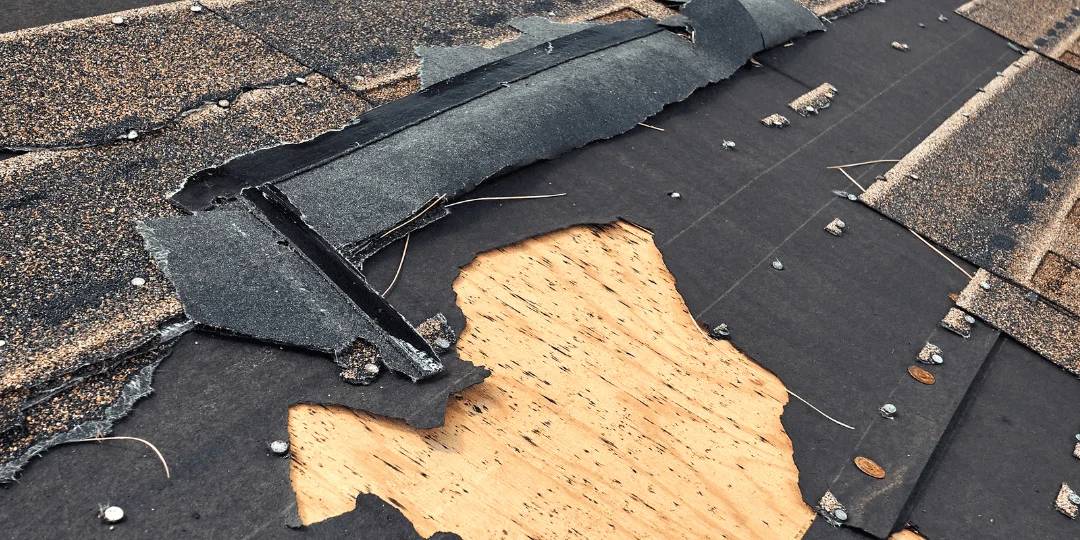
Denver-metro summers move fast. One minute it's clear and calm, and the next a thunderstorm rolls off the foothills with gusts strong enough to rattle windows and strip branches off trees. Once the sky clears, most homeowners check the obvious things: broken branches, a fence panel down, patio furniture in the neighbor's yard. The roof rarely gets a second look, because from the driveway it usually still looks fine.
That's exactly the problem. Wind breaks the seal that holds a shingle down without ever knocking a single one loose.
How Front Range Wind Actually Damages a Roof
Summer thunderstorms along the Front Range can throw out sudden gusts well past 60 mph, especially when a storm's outflow hits ahead of the rain. Add in late-summer monsoon activity, and Denver-metro roofs can take several rounds of high wind between June and September.
Shingles are built to handle wind up to a point, but every gust that catches an edge weakens the adhesive seal a little more. Eventually the seal breaks. The shingle can still look completely normal sitting on the roof, but it's no longer locked down, and the next storm is what tears it loose or drives water underneath it.
Signs You Can Actually Spot From the Ground
Walk the perimeter of your home after a storm and look for:
- ✔Shingles that look "puffed up" instead of flat. A sign the seal underneath has already let go.
- ✔Roof vents or turbine caps that are dented, twisted, or missing. These sit higher than the roofline and take the hardest hit.
- ✔Siding panels that look loose, cracked, or out of alignment. Wind stresses siding the same way it stresses shingles.
- ✔Gutters or downspouts pulling away from the fascia board. A sign the whole roofline took a beating, not just the shingles.
- ✔Branches, leaves, or grit collecting on the roof or in the gutters. Often a clue that something shifted enough to catch debris.
What's Easy to Miss From the Ground
Why This Matters for Your Insurance Claim
Colorado homeowner's policies generally cover wind damage that affects your roof's ability to do its job, not routine wear and tear. That's why documentation matters so much. Our insurance claim specialists know what adjusters are looking for, and we make sure nothing gets missed: shingles, flashing, gutters, siding, and window screens are all part of the same storm event, and all of it should be accounted for in one claim.
Most policies also have a limited window for filing a claim tied to a specific storm. The longer you wait, the more that damage tends to compound, and the harder it can be to tie it back to a specific date.
What to Do After a Windstorm
Walk the property
Take date-stamped photos of anything you can see from the ground.
Note the storm
Write down the date and rough time it came through.
Call for a free inspection
We'll get up on the roof so you don't have to.
Review the findings
Then decide whether you want to file a claim.
Frequently Asked Questions
Do I need missing shingles for this to count as wind damage?
No. A shingle can lose its seal and crease without ever coming off the roof, and it's still legitimate, claim-eligible damage. That's exactly why a professional inspection matters more than a look from the driveway.
How soon should I get my roof checked after a storm?
Within a week or two is ideal. Wind damage tends to get worse with each additional storm, and insurance policies typically have a deadline for filing a claim tied to a specific weather event.
Does wind damage to siding or gutters get covered too?
Often, yes, if it's part of the same storm event. This is one of the reasons we inspect the whole exterior, not just the roof, before we help you file.
What if I don't see anything wrong but I'm still not sure?
That's the most common situation we see. A free inspection takes the guesswork out of it, and there's no obligation to move forward with repairs afterward.
Building on Integrity, Storm After Storm
We've been serving Denver-metro homeowners for nearly three decades, and we don't chase storms or disappear once the job's done. If a recent windstorm rolled through your neighborhood, let's get your roof checked before the next one finds the damage for you.